
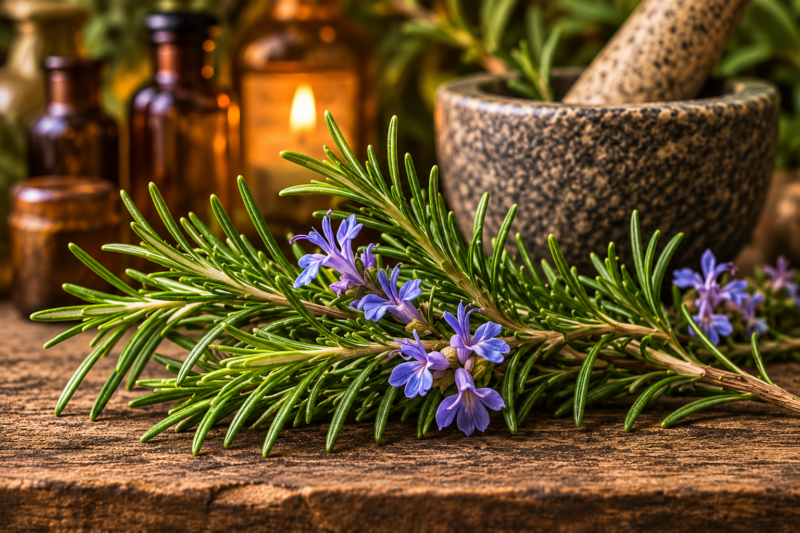
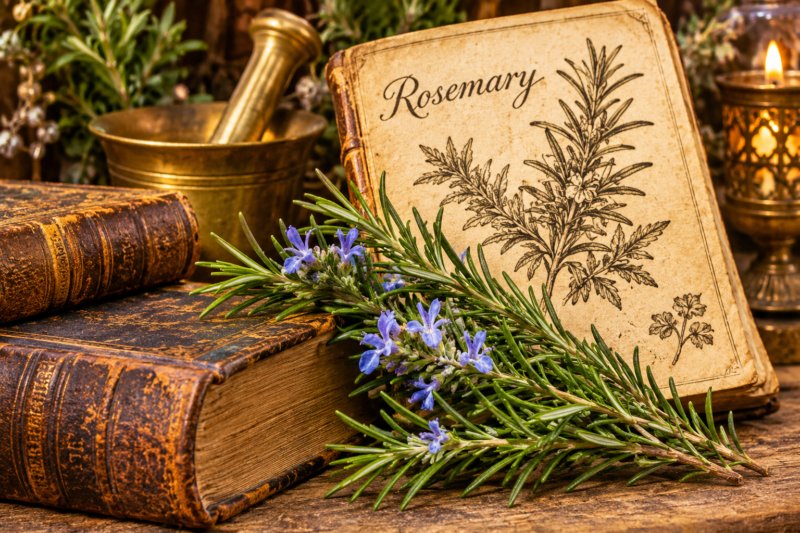
Rosemary’s fragrant evergreen leaves have long been incorporated into culinary, household, and traditional herbal preparations. Its fresh, invigorating, pine-like aroma makes it a versatile botanical for teas, infused oils, aromatic vinegars, bath blends, and everyday apothecary creations.
Rosemary
Salvia rosmarinus

History & Folklore
Rosemary has been treasured since ancient times, particularly among the Greeks and Romans, who associated the fragrant herb with remembrance, loyalty, and enduring affection. Its name comes from the Latin ros marinus, meaning “dew of the sea,” reflecting its natural affinity for the Mediterranean coastline.
Throughout European tradition, rosemary became closely connected with memory and remembrance. Sprigs were carried at weddings and funerals, symbolizing fidelity, love, and the enduring bonds between people. It was also planted in household gardens and used in fragrant waters, aromatic preparations, and ceremonial customs.
Rosemary remains one of the most recognizable herbs in traditional European herbal culture, celebrated for its fragrance, resilience, and rich symbolism.
Botanical Details
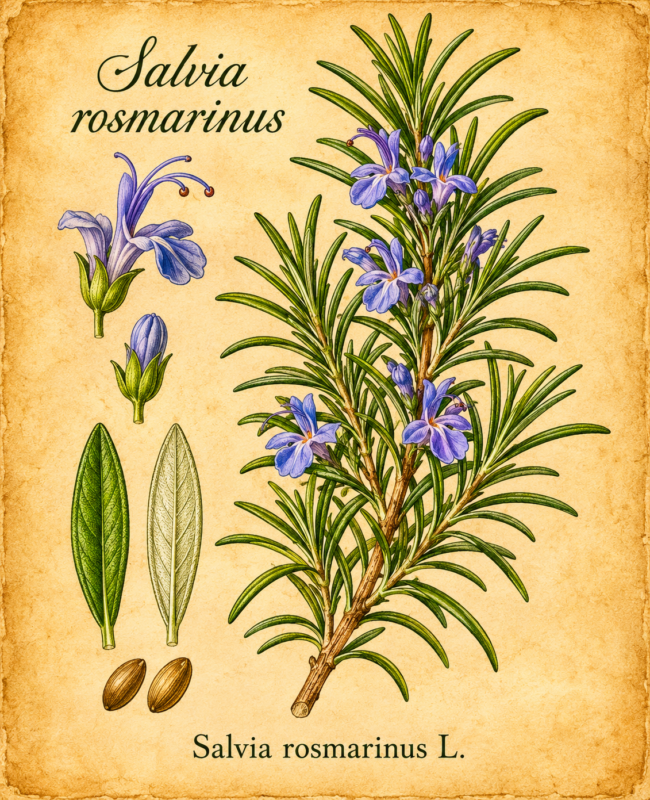
Latin name: Salvia rosmarinus
Family: Lamiaceae
Common Names: Rosemary
Plant Part Used: Leaves and flowering tops
Appearance: Evergreen woody shrub with narrow, needle-like leaves, dark green upper surfaces, silvery undersides, and small blue, violet, or white flowers
Native to: Mediterranean region

At a Glance
-
Plant Type: Perennial evergreen aromatic shrub
-
Growing Habit: Woody, upright, and branching
-
Aroma: Fresh, herbaceous, camphoraceous, and pine-like
-
Botanical Character: Warming, resinous, and aromatic
-
Traditional Associations: Remembrance, protection, purification, and clarity
Traditional Uses
Rosemary has long been appreciated in traditional herbal practices for its invigorating fragrance and versatility. Across generations, it has found a place in household apothecaries, culinary traditions, fragrant preparations, and ceremonial customs.
Common Traditional Uses Include:
-
Herbal teas and infusions
-
Culinary seasonings and aromatic vinegars
-
Infused oils and botanical preparations
-
Fragrant baths and bathing blends
-
Herbal sachets and potpourri
-
Incense and ceremonial preparations
-
Traditional hair and body care
Preparations
Rosemary’s fragrant leaves have long been valued in culinary traditions, household preparations, and herbal practices. Its fresh, invigorating aroma and distinctive evergreen character make it a welcome addition to teas, infused oils, aromatic blends, and everyday apothecary creations.

Ways to Prepare Rosemary
Herbal Infusions: Steep dried or fresh rosemary leaves in hot water to create an aromatic herbal infusion.
Infused Oils: Combine dried rosemary with a carrier oil to create a fragrant botanical-infused oil.
Herbal Vinegars: Infuse rosemary in vinegar for culinary seasoning and aromatic preparations.
Baths & Soaks: Add rosemary to botanical bath blends for a refreshing aromatic experience.
Sachets & Potpourri: Combine dried rosemary with other fragrant botanicals for household sachets and decorative potpourri.
Culinary Uses: Add fresh or dried rosemary to roasted vegetables, breads, soups, and Mediterranean-inspired dishes.